Before You Produce
GMP, HACCP, Halal and FSSC 22000 Explained: Choosing a Snack Factory with Confidence
A plain-language guide to food factory standards — GMP, HACCP, Halal and FSSC 22000 — and why they matter for retail listings and export.
Key takeaways
- GMP is the base, HACCP controls hazards, FSSC 22000 is a broader management system
- Halal is a separate dimension requiring its own certification
- Always check certificate scope, site and validity
Why factory standards matter
Food safety standards show that products are made systematically and traceably. Retailers, importers and overseas markets often set minimum factory standards before accepting a supplier.
GMP
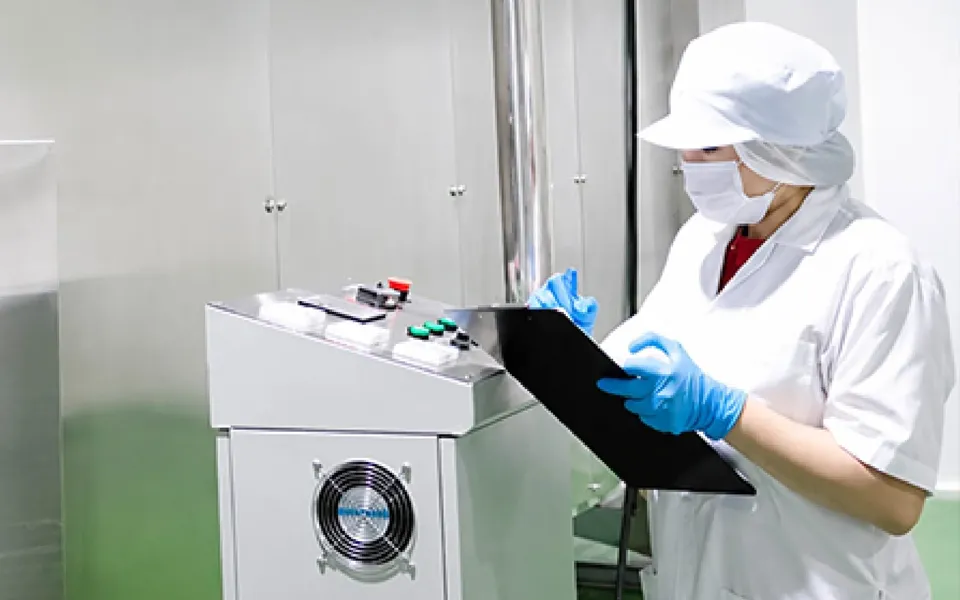
GMP (Good Manufacturing Practice) covers premises, equipment, staff hygiene and process control. It is the foundation of any food factory.
HACCP
HACCP (Hazard Analysis and Critical Control Points) identifies hazards and sets critical control points in production to prevent biological, chemical and physical risks.
Halal
Halal certification confirms ingredients and processes follow Islamic requirements. In Thailand it is issued by the Central Islamic Council of Thailand, and it is key for the Middle East, Malaysia and Indonesia.
FSSC 22000
FSSC 22000 is a GFSI-recognized food safety management system valued by many international retailers and buyers, and it helps open export doors.
Standards compared
The role of each at a glance.
| Standard | Focus | Often requested by |
|---|---|---|
| GMP | Hygiene and good practice | Licensing and general retail |
| HACCP | Hazards and critical control points | Retailers and overseas buyers |
| FSSC 22000 | GFSI-recognized safety management | International retailers and brands |
| Halal | Islamic compliance | Muslim consumer markets |
The seven HACCP principles
HACCP works as a system built on seven principles.
- Conduct a hazard analysis
- Determine critical control points
- Establish critical limits
- Establish monitoring
- Establish corrective actions
- Verify the system works
- Keep documentation and records
Example hazards in snack production
Illustrative only; each factory's plan depends on its products and processes.
| Hazard type | Example | Example control |
|---|---|---|
| Biological | Microbes in ingredients or post-heating | Heat and hygiene control |
| Chemical | Mycotoxins in grains and nuts, degraded oil | Incoming checks and oil testing |
| Physical | Metal or foreign matter | Sifting and metal detection |
| Allergen | Cross-contact between recipes | Scheduling and cleaning |
Vetting a factory
Do not rely on website logos alone.
- Request certificate copies and check expiry
- Read the scope and site address
- Verify with the certification body or public database where possible
- Ask about traceability and recall plans
- Request a visit under the factory's conditions
Termnature and standards
Termnature's company information lists GMP, HACCP, HALAL and FSSC 22000. Applicable certification scope depends on product and project — ask our team for the documents relevant to yours.
Frequently asked questions
Which standards do retailers require?
It varies. Generally Thai FDA approval and GMP at minimum; some retailers or importers ask for HACCP or GFSI-level standards.
How do I target Muslim consumers?
Choose a halal-certified factory and confirm every ingredient in the formula meets halal criteria.
If a factory has HACCP, is every product covered?
Not necessarily. Certificates define products, processes and sites; confirm yours is in scope.
Can I print a halal mark if the factory is certified?
Use of the mark depends on certification of that product and the certifier's conditions. Confirm before adding it to artwork.