Global Snack Trends
The Gummy Boom: Functional Gummy Trends and Brand Opportunities
Why gummies are one of the fastest-growing snack formats — vitamin, fiber and kids' gummies — and what to know before hiring a gummy manufacturer.
Key takeaways
- Decide early whether it is a snack or a supplement — it affects documents, labels and the facility
- Heat, moisture and acidity affect added ingredients; test across shelf life
- Gelatin and pectin deliver different textures and suit different markets
Why gummies are so popular
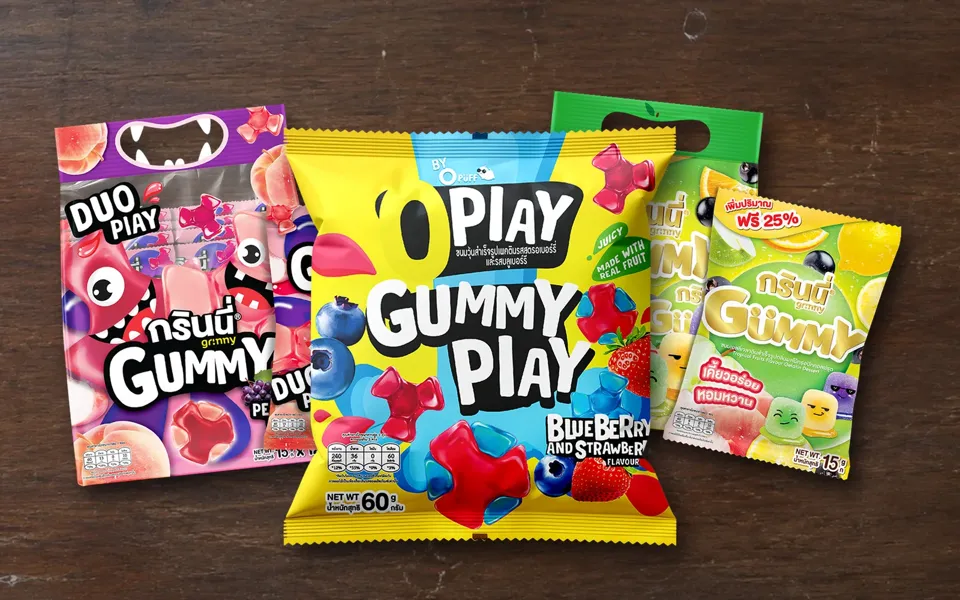
Gummies are easy to eat, portable and more enjoyable than tablets or capsules. They appeal across ages, from kids to older adults, in both confectionery and functional categories.
Gummy directions worth exploring
Common directions in the market:
- Fruit gummies with Thai fruit flavors like mango, lychee and pineapple
- Gummies with added vitamins or fiber
- Reduced-sugar gummies
- Plant-based gummies using pectin instead of gelatin for vegan and halal markets
Gelatin or pectin?
Gelatin gives a soft, chewy bite; pectin gives a cleaner, faster-melting texture and is plant-based. Choose based on your market — halal and vegan buyers often prefer pectin.
How gummies are made, briefly
Knowing the steps helps you brief accurately and see where time and cost arise.
- Dissolve and cook the base: sweeteners and gelling agent
- Add acid, color, flavor and special ingredients at the right stage
- Deposit into molds
- Set and control moisture
- Oil or sugar coat to prevent sticking
- Pack and run quality checks
Gelatin vs pectin
Actual behavior depends on the whole recipe; this is a general picture.
| Point | Gelatin | Pectin |
|---|---|---|
| Source | Animal collagen | Plants such as citrus peel and apple |
| Texture | Chewy, elastic | Soft, clean bite |
| Vegan | No | Yes, if all other ingredients are |
| Halal | Needs certified gelatin | Recipe and process still need certification |
| Heat resistance | Softens easily | Generally better |
Gummies in hot, humid climates
Gummies are sensitive to temperature and humidity and may stick, sweat or harden. For Thai retail or sea export, test recipe and packaging under realistic conditions, use moisture-barrier packs and print storage advice.
Questions before going functional
Answer these with your factory and a regulatory specialist.
- Is the added ingredient permitted in your markets, and at what limit?
- Does it stay at the labeled level until expiry?
- How many pieces per day, and could it encourage overeating?
- Can its taste be masked?
- Are warnings or age limits required?
Watch-outs for functional gummies
Adding vitamins or extracts may classify the product as a dietary supplement, with different registration and claim rules than a regular snack. Decide the product category early to plan documentation correctly.
Frequently asked questions
What is the shelf life of gummies?
It depends on formula, moisture and packaging. The factory tests and sets shelf life per recipe.
Can I have a custom gummy shape?
Shapes and molds can be discussed with the factory; custom molds may add tooling cost and minimums.
Can gummies be made without sugar?
Yes, using alternative sweeteners or certain fibers, but texture and shelf life change. Some sugar alcohols may require a laxative-effect warning.